Estimated reading time: 8 minutes
Personal training works best when the schedule fits your body, your goals, and your life. Some clients need frequent sessions to build confidence, learn proper form, and stay accountable. Others do well with a lower frequency once they have a strong base and can complete workouts on their own.
At Body360 Fit, the goal is not to add random workouts to your week. It’s to help you understand how often you should see a personal trainer based on your skill level, time, and long-term goals. With NSCA-certified trainers, private studio training, and focused corrective strategies from Functional Movement Systems, clients get guidance that feels clear, personal, and practical.
A good training schedule should feel realistic, not random. Your goals, experience level, progress, and habits between sessions all play a role in how often you should train.
How Often Should You See a Personal Trainer?
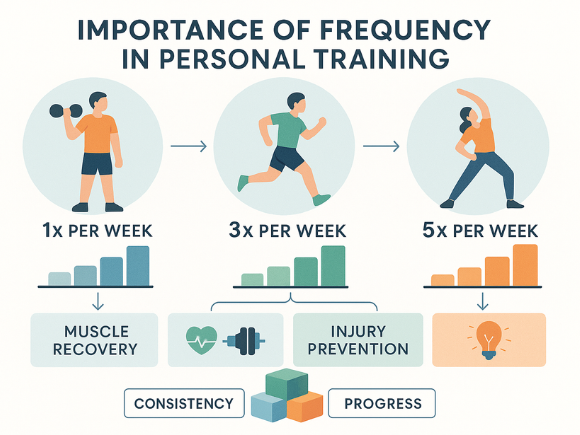
For many people, meeting with a personal trainer twice a week is a strong starting point. It gives you enough coaching to improve motor skills, build form, stay motivated, and make steady progress without crowding your schedule. Some clients train once per week for accountability and program updates. Others train three to four times per week when they want faster support, have a specific term goal, or need help rebuilding fitness after time away.
The right frequency depends on several factors:
- Your current fitness level and movement quality
- Your goals, such as strength, fat loss, mobility, or consistency
- Your schedule, recovery, and budget
- How much training can you do safely on your own
- Whether you need coaching, accountability, or a full workout plan
A client new to strength training may benefit from frequent sessions in the beginning. A client who already understands proper form may only need weekly coaching to refine technique and adjust the plan. Someone preparing for an event, returning from a setback, or trying to build a stronger physique may need two to three sessions per week for a focused training block.
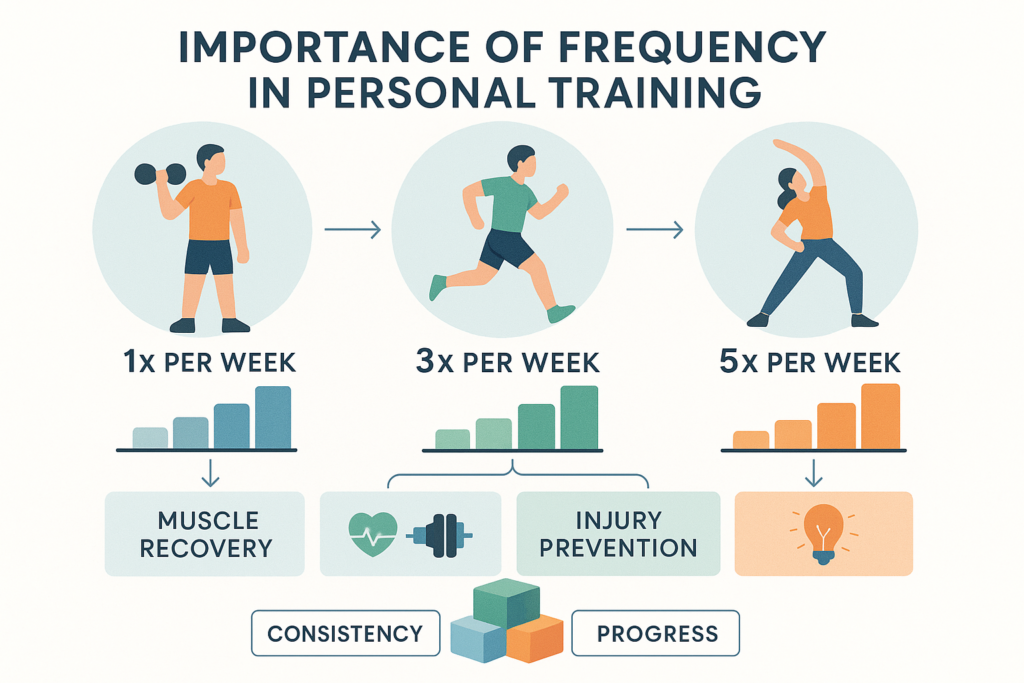
At Body360 Fit, frequency starts with assessment. Your trainer looks at how you move, what you want to achieve, and how much time you can realistically give to training. From there, your schedule becomes clear, personal, and practical.
Match Your Training Sessions to Your Goals
The best personal training schedule starts with a clear goal. Strength training is different from training for fat loss, posture, pain-free movement, or general health and longevity. Your goal shapes how often you train, how intense each workout should be, and how much recovery you need.
A client focused on learning basic lifts may need more hands-on coaching at first. Proper squats, hinges, pushes, pulls, and core work require repetition and feedback. Frequent sessions help prevent small form issues from becoming habits.
A client focused on fat loss may need a mix of strength work, conditioning, habit-based nutrition support, and activity outside the gym. In that case, training two or three times per
week can provide structure while allowing enough time for walking, recovery, and lifestyle changes.
A client focused on long-term strength may not need constant supervision forever. Once the technique is solid, a lower frequency can work well if the trainer provides a clear plan and checks progress regularly.
| Goal | Suggested Frequency | Why It Works |
|---|---|---|
| Learn proper form | 2 to 3 sessions per week | Builds skill faster with direct coaching |
| Improve strength | 2 to 3 sessions per week | Supports steady progress and recovery |
| Lose body fat | 2 to 3 sessions per week | Combines structure, accountability, and movement |
| Stay accountable | 1 session per week | Keeps the plan on track without overloading your schedule |
| Break a plateau | 2 sessions per week for a set block | Adds focused coaching and new training stimulus |
| Maintain results | 1 session per week | Works for clients who can train independently |
Trainer cost also plays a role. Some clients choose a lower training frequency and use trainer guidance to stay consistent between visits. Others prefer multiple weekly sessions because they value coaching, privacy, and a set appointment. The best plan is the one you can follow with consistency. Body360 Fit helps clients make those decisions with clear guidance, not pressure. The goal is steady progress, not wasted sessions.
How Skill Level and Progress Affect Personal Training Frequency
Your skill level has a major impact on how often you should meet with a personal trainer. Beginners usually need more coaching. Experienced clients may need less frequent support, but the sessions should be sharper and more specific.
If you are new to fitness, returning after a long break, or unsure how to use weights safely, two to three training sessions per week can help you build a strong base.
You get repeated practice, real-time correction, and a trainer’s personal approach that keeps your workouts safe and productive.
If you are intermediate, you may already know the basics but need help with consistency, exercise selection, or progression. One to two sessions per week can keep your training organized and help you avoid plateaus.
If you are advanced, you may only need targeted coaching. That might mean one session per week or a short block of frequent sessions to improve technique, increase strength, or prepare for a specific event.
Your ideal training frequency can also change over time. What works during your first month may not be the same schedule you need after your strength improves, your movement feels better, or your routine becomes easier to maintain.
Some clients begin with frequent sessions because they need coaching, structure, and confidence. As they build better habits, they may shift to fewer sessions while continuing to follow a plan between visits. Other clients increase their frequency when they hit a plateau, start a new goal, or need extra accountability during a busy season.
Signs that you may need more support include stalled progress, inconsistent workouts, recurring form issues, low motivation, or uncertainty about what to do next. Signs that a lower frequency may work include strong technique, consistent solo workouts, good recovery, and clear progress from your current plan.
The most common mistake is choosing a schedule based only on motivation. Motivation changes. Skill, structure, and accountability are what keep you moving when work gets busy or progress slows.
A personal trainer can help you make these changes without guessing. At Body360 Fit, frequency is not treated as fixed. Your trainer can review your progress, adjust your plan, and help you choose a schedule that still fits your life while moving you toward your goals.
Why a Private Fitness Studio Helps You Stay Focused
A focused gym environment can make a real difference in your results. Crowded spaces, long waits for equipment, loud distractions, and uncertainty can make training less productive. A private studio removes many of those barriers.
At Body360 Fit, clients train in a private Beverly Grove studio built for attention, precision, privacy, and comfort. That matters because personal training depends on feedback. Your trainer needs to see how you move, adjust the workout when needed, and keep the session aligned with your goals.
In a focused setting, there is less wasted time. You are not waiting for machines, guessing what to do next, or trying to stay motivated in a crowded room. Each session has a clear purpose.
This type of environment is especially helpful for busy professionals. When your time is limited, every minute in the gym should support your plan. A private studio helps you stay present, train safely, and work with better intent.
Distraction-free training can also improve confidence. Many clients feel more comfortable learning new movements when they are not in a crowded environment. That comfort helps them ask questions, practice technique, and stay consistent.
When your schedule is tight, consistency depends on the quality of each session. A focused space makes it easier to build momentum.
What to Do Between Sessions
Your progress does not depend only on what happens with your trainer. What you do between sessions affects recovery, motivation, and results.
A strong personal training plan includes simple habits that support the work you do in the studio. Use these habits between sessions:
- Walk daily or aim for steady movement throughout the day.
- Follow the workouts or mobility drills your trainer assigns.
- Prioritize protein, hydration, and balanced meals.
- Sleep enough to support recovery and strength.
- Track workouts, energy, and soreness so your trainer can adjust the plan.
- Keep your schedule realistic instead of trying to do too much at once.
This is where personal training becomes easier to sustain. You don’t need a perfect routine. You need a clear routine that fits your work, family, and health priorities.
If you train once per week, your between-session plan matters even more. Your trainer may give you two solo workouts, a walking target, or mobility work to complete before the next session. If you train two or three times per week, your off days may focus on recovery, light activity, and nutrition.
Body360 Fit trainers help clients connect studio work with daily habits. That might include adjusting workouts around travel, managing soreness, or making the plan easier to follow during a busy week.
Personal training should support your life, not compete with it. The right schedule gives you structure while still leaving room for recovery, work, and real life.
Build a Training Rhythm That Works for You
The right personal training schedule should feel clear, focused, and realistic. Whether you need frequent sessions for accountability or a lower frequency with strong guidance between visits, Body360 Fit can help you choose a plan that fits your goals, movement patterns, and lifestyle.
Book a complimentary Functional Movement Screen at Body360 Fit to see how your body moves, where you need support, and how often to train for steady, measurable progress.
— Christian Graham
Founder, Body360 Fit

![Full Body Kettlebell Workout [PDF] | Body360 Fit](https://body360fit.com/wp-content/uploads/2021/01/Full-Body-Kettlebell-Workout-PDF.png)