Estimated reading time: 6 minutes
How does corrective exercise work? Corrective exercise is designed to address faulty movement patterns, muscle imbalances, postural issues, and joint limitations that reduce performance and increase risk of injury. Instead of adding more training on top of poor mechanics, it restores proper movement patterns so strength, mobility, and stability improve together.
At Body360 Fit, every corrective exercise program begins with a detailed assessment to identify movement dysfunction, limitations, and what needs to be corrected. If you’re new to working out, it helps to first understand what corrective means for you before diving into how it works.
Key Highlights
Corrective exercise works by:
- Improving movement patterns, biomechanics, and control
- Identifying muscle imbalances and faulty movement patterns
- Using a structured corrective exercise protocol to improve movement quality
- Combining mobility, stretching, and strength training
- Reducing the risk of injury and improving long-term performance
How Corrective Exercises Change Movement and Fix Muscle Imbalances
Movement problems come from joint limitations, muscle imbalances, and faulty movement patterns.
Corrective exercise can improve:
- Joint mobility
- Muscle activation
- Movement patterns
- Motor skills
- Functional strength
When these improve, your body produces force more efficiently, strength at end ranges of motion improves, and movement becomes more stable and consistent.
This is how corrective exercises help improve both training performance and daily movement.
The Corrective Exercise Process
A structured corrective exercise program follows a defined sequence to address movement dysfunction and muscle imbalances.
- Assessment: A functional movement assessment identifies faulty movement patterns, joint restrictions, and muscle imbalances.
- Restore (Release Work): Techniques like myofascial release and stretching “tone down” tight muscles and improve tissue quality.
- Rebuild & Perform (Activation): Corrective exercises help correct muscle imbalances by strengthening weak or underactive muscles.
- Reinforce and Protect (Integration): Improved movement patterns are integrated into exercise programs and training, which help to build strength, motor skills, and stability.
Myofascial Release: Enhancing Mobility and Recovery in Beverly Grove
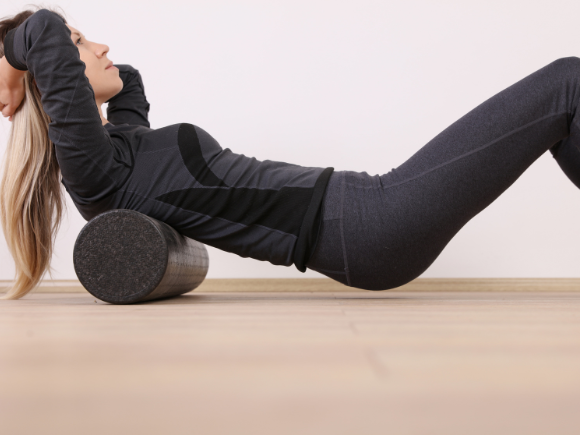
Myofascial release reduces tension in tight tissue to improve mobility and prepare muscle tissue for exercise and performance. At Body360 Fit in Beverly Grove, every program begins with soft tissue work and foam rolling drills to address restrictions that limit movement and contribute to poor mechanics.
At its core, this technique targets fascia—the connective tissue surrounding muscles—to improve how muscles function. It’s used by athletes and everyday gym-goers alike, especially those dealing with chronic tightness or long hours of sitting.
Applied alongside corrective exercise and functional strength training, myofascial release helps restore efficient movement, reduce discomfort, and lower injury risk—so your body performs the way it should.

Sample Full Body Program (Simplified)
A corrective exercise program doesn’t need to be complex. The goal is to apply the right sequence to address movement deficiencies, muscle imbalances, and faulty movement patterns. We develop custom programs for every client post-assessment.
Here’s what a full-body program might look like:
1. Release (1–2 exercises)
Reduce tension in overactive muscles using myofascial release
- Foam roll hips, lat, and upper back
2. Mobility (2–3 exercises)
Improve joint range and positioning
- 90/90 hip stretch
- Thoracic rotation
- Ankle mobility drill
3. Activation (2–3 exercises)
Help correct muscle imbalance and improve control
- Glute bridge (2 x 8–10)
- Dead bug (2 x 6–8)
- Mini-Bands – Monster walks (2 x 10ea)
4. Integration (strength-based movement)
Restore proper movement patterns under load using compound exercises:
- Goblet Squat
- 1/2 Kneeling Inline Chop
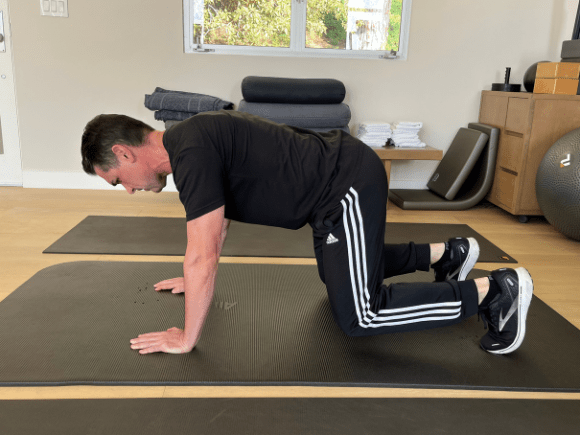
- Bear Crawl (forwards only)
- Reaching SLDL
- TK Anti-Rot Hold
- Chin Up w/ Iso Hold or Tall Kneeling Vertical Pull
Each phase is designed to restore proper movement patterns and improve the way your body functions as a system. This approach ensures corrective exercises are applied with purpose, not randomly.
Over time, this type of structured corrective exercise program helps improve movement efficiency and build strength on a stable foundation. Each 4-week phase builds on the foundation and progresses your program.
Why Corrective Exercise Programs Work Differently for Every Individual
How corrective exercise works depends on the individual. No two people move the same.
Similar symptoms can come from different issues:
- One person may have limited mobility
- Another may lack stability or motor control
- Another may have underlying muscle imbalances
A proper assessment identifies the cause, not just the symptom. Each evaluation leads to a structured corrective exercise program built around how your body moves and where it breaks down.
From there, the program is applied in phases:
- Some need more mobility and stretching to restore range
- Others need stability and strengthening to improve control
- Others need to retrain movement under load to correct patterns
As the body improves, the corrective exercise program adjusts—progressing exercises, adding load, and reinforcing proper movement over time.
Why More Training Doesn’t Fix the Problem
More training doesn’t fix movement dysfunction—it reinforces it.
Common results:
- Uneven strength
- Persistent tightness
- Poor movement patterns
- Increased injury risk
Corrective exercise fixes the issue first, so training becomes effective.
What Improves When You Fix Movement
When movement patterns and muscle imbalances are corrected:
- Strength improves
- Mobility increases
- Joint stress decreases
- Movement becomes more efficient
This is why corrective exercises improve both performance and long-term function.
What Progress Looks Like
- Weeks 1–2: Improved motor control and awareness
- Weeks 3–4: Better stability and movement quality
- Weeks 5–8: Increased strength and performance
These changes happen because proper movement patterns are restored.
Corrective Exercise Methods and Their Role
| Phase | Focus | Result |
|---|---|---|
| Assessment | Identify dysfunction | Clear starting point |
| Reset | Reduce tension | Improved mobility |
| Rebuild | Strengthen weak muscles | Better stability |
| Reinforce | Apply movement to training | Improved performance |
How Corrective Exercise Compares to Physical Therapy
Corrective exercise and physical therapy both address movement issues, but they serve different roles.
Physical therapy focuses on recovery after injury and restoring function.
Corrective exercise focuses on improving movement patterns, posture, and performance.
A structured corrective exercise program can help:
- Identify movement dysfunction
- Restore proper movement patterns
- Improve posture
- Reduce injury risk
- Support long-term training
Common Mistakes That Keep People Stuck
- Ignoring muscle imbalances
- Training through faulty movement patterns
- Skipping a proper assessment
- Only stretching without strengthening
- Not using myofascial release
- Following random exercise programs
Conclusion
Corrective exercise works by fixing how your body moves at its foundation. Addressing movement dysfunction, muscle imbalances, and faulty movement patterns allows your body to move efficiently, build real-world strength, and perform without compensation.
At Body360 Fit, every corrective exercise program is built to correct the problem first—so everything that follows progresses without the risk of re-injury. If you’re ready to move better, train smarter, and build lasting results, this is where it starts.
— Christian Graham
Founder, Body360 Fit

![Full Body Kettlebell Workout [PDF] | Body360 Fit](https://body360fit.com/wp-content/uploads/2021/01/Full-Body-Kettlebell-Workout-PDF.png)