Estimated reading time: 8 minutes
If you are asking how long does body transformation take, the honest answer is that it depends on your starting point, your goal, and how consistent you are with training, nutrition, sleep, and recovery. Some people notice early changes in energy, mood, and workout performance within the first few weeks.
Visible physical changes often take longer. In many cases, small but real progress shows up in four to six weeks, more obvious change may appear by six weeks to three months, and larger change often takes six months or more. The best approach is to focus on steady progress instead of chasing a fast result.
At Body360 Fit, the process is built around private coaching, movement-based assessment, strength work, and habits that support lasting change. That matters because a true body transformation is not just about losing weight quickly. It is about improving body composition, building muscle, increasing strength, and creating a better routine you can keep.
What Affects Your Body Transformation Timeline?
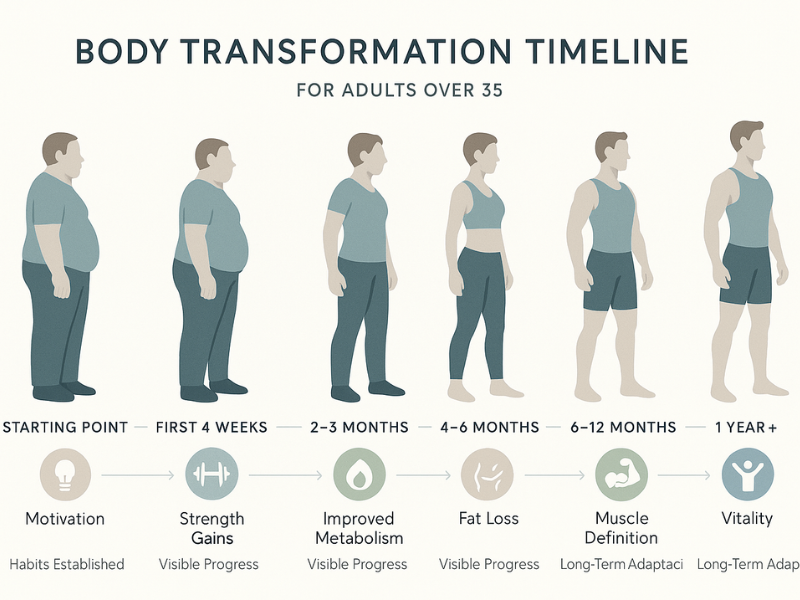
No two people start in the same place. That is why one person may see early fitness results in a month while another needs more time. Your transformation timeline is shaped by several factors working together.
The biggest factors include:
- Your current fitness level
- How much body fat do you want to lose
- Whether your goal is building muscle, fat loss, or both
- The quality of your workout routine
- How often do you train each week
- Your sleep, stress, and daily activity
- Your eating habits, including protein and total calorie intake
Someone who is new to training may see faster early progress because almost any well-structured program will feel new to the body. A person who already trains regularly may need more precision to keep improving. Age also matters, but it does not stop progress. Adults over 35 can still make strong fitness progress with the right training and enough consistency.
Genetics can influence how fast you gain muscle growth or lose fat, but genetics are not the whole story. Most people improve far more from better habits than from worrying about perfect conditions.
What Changes You May Notice First
Many people expect the mirror to change first. Often, that is not what happens. The first signs of progress are usually less dramatic but still important.
Early wins often include:
- better energy during the day
- improved sleep quality
- better stamina during a workout
- less soreness after workouts
- improved mood and focus
- small increases in strength
- a better sense of control around food and routine
These changes matter because they show your body is adapting. Even before a major physical change appears, your health and fitness may already be improving.
During the first few weeks, your nervous system often becomes more efficient. That means exercises feel smoother, your form improves, and you may lift more even before major muscle gain happens. This is one reason the scale alone does not tell the whole story.
A Realistic Body Transformation Timeline
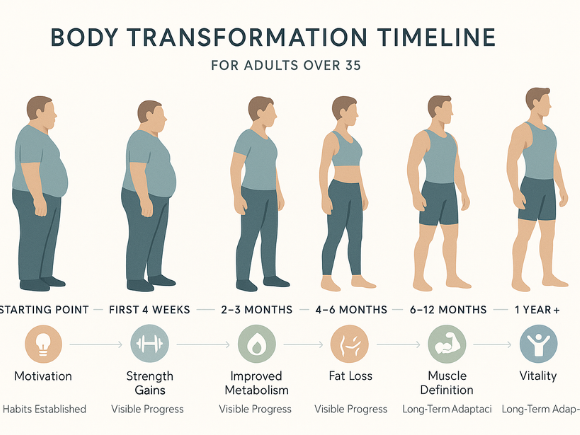
A realistic timeline helps people stay patient and avoid giving up too early. The chart below gives a broad overview. These are not guarantees. They are general ranges for people following a solid plan with steady effort.
| Time Period | What You May Notice |
|---|---|
| First 2 weeks | Better routine, improved energy, less stiffness, early workout confidence |
| Four to six weeks | Small improvements in strength training performance, better fitness habits, early body changes |
| Six weeks to 3 months | More visible fat loss or better muscle tone, better endurance, stronger workout consistency |
| 3 to six months | Clearer changes in body composition, stronger lifts, better shape, more noticeable results |
| 6 months and beyond | Larger transformation, better long-term habits, stronger health markers, more sustainable changes |
This is why it helps to think beyond one short challenge. Real results build over time. The best changes are often the ones that come from a plan you can keep following after the first burst of motivation fades.
Fat Loss and Building Muscle Happen at Different Speeds
A lot of people use the word transformation to mean one thing, but there are actually several goals hiding under that label. You may want to lose fat, gain muscle, or do both at the same time. Each path moves a little differently.
Fat loss can happen sooner when your nutrition supports it. If your eating habits improve, your calorie intake stays in a sensible range, and you follow a consistent training plan, visible changes may begin in the first several weeks. That said, healthy fat loss is usually gradual. Fast drops in weight are not always a sign of quality progress.
Building muscle usually takes longer. Many people underestimate that. Real muscle growth is a slower process than losing a few pounds. This is especially true if you want a lean, athletic look instead of just a lower scale number. Muscle takes repeated effort, progressive strength training, enough protein, and enough recovery.
If you are doing both at once, the timeline may feel slower, but the outcome can still be strong. You may look leaner, feel stronger, and improve your body composition even if your scale weight does not drop quickly.
This is why many coaches look beyond just pounds lost. A person can stay near the same weight while losing fat and adding muscle. That is still excellent progress.
The Role of Strength Training, Nutrition, and Recovery
Transformation does not come from workouts alone. A smart plan combines strength training, nutrition, and recovery.
Strength training
A well-designed strength training plan helps you keep and build muscle, support fat loss, and improve fitness. It also gives your body a reason to adapt. Without enough resistance work, many people lose weight without getting the shape or performance they want.
A good program should include:
- clear exercise selection
- progressive overload over time
- enough intensity to challenge the body
- enough recovery to keep training well
- a schedule that fits real life
Nutrition
Food choices affect how quickly your body transformation moves. You do not need a perfect diet, but you do need a repeatable one. Enough protein supports recovery and muscle growth. Balanced meals help with energy and consistency. A realistic intake matters more than extreme restriction.
Recovery
Sleep, stress, and recovery habits play a bigger role than many people realize. If your body is always tired, sore, and overworked, progress slows down. Recovery supports hormonal balance, workout quality, and better decision-making around food and routine.
Why Some People See Results Faster Than Others
It is easy to compare your timeline with someone else’s pictures online, but that often creates the wrong expectations. People respond differently for many reasons.
Some common reasons one person progresses faster include:
- They have more room for early improvement
- They follow their workout routine more consistently
- They recover better between workouts
- They eat enough protein and manage portions well
- They have a coach or a structured plan
- They track their progress instead of guessing
Another issue is that many online transformations hide important details. You may not know if the person trained before, used a very strict short-term plan, or picked flattering photos, lighting, and timing. A better question is not how fast someone else changed. A better question is whether your routine is moving you in the right direction.
How to Measure Progress the Right Way
If you only use a scale, you may miss a lot of progress. A smarter approach uses several markers.
Useful ways to measure fitness progress include:
- Photos taken in the same lighting
- Waist and hip measurements
- How clothes fit
- Workout numbers such as reps, load, or volume
- Energy, sleep, and recovery
- Changes in posture and daily movement
- Body composition trends if measured consistently
This matters because results are not always obvious day to day. Progress is easier to stick with when you can see signs that your plan is working.
For example, maybe your scale weight barely changes for two weeks, but your waist gets smaller, your lifts go up, and your workouts feel better. That still counts as strong progress.
Common Mistakes That Slow Down Transformation
Many people do not fail because they lack effort. They stall because their plan is hard to maintain or is built on the wrong ideas.
Common mistakes include:
- changing the plan too often
- doing random workouts without progression
- eating too little and losing energy
- not getting enough protein
- expecting huge changes in a very short time
- focusing only on the scale
- skipping recovery and sleep
- training hard on weekdays and quitting on weekends
Another mistake is thinking every session must be extreme. A solid fitness plan does not need endless exhaustion. It needs structure. Moderate, repeatable effort usually beats short bursts of unsustainable intensity.
What Busy Adults Should Expect
For busy professionals, the goal should be realistic progress that fits the week you actually live. You do not need to train for hours every day. You do need a plan that helps you show up consistently.
In many cases, three to four quality sessions per week, smart food habits, and better recovery can create meaningful change over several months. That approach works better than trying to do everything perfectly for ten days and then burning out.
If your life includes long work hours, travel, or family demands, patience matters even more. A slower but steadier path often produces better long-term results than a short, aggressive push.
This is where coaching can help. A structured plan removes guesswork and makes it easier to keep moving even when life gets busy.
A Better Way to Stay on Track
If you want lasting change, it helps to stop thinking only in terms of speed. The better question is whether your routine is leading to better habits, better strength, and better long-term health. Transformation is rarely instant, but it can be very real when the system is built well.
At Body360 Fit, private coaching is built around assessment, personalized training, and sustainable progress. If you want help building a plan that fits your current level and your schedule, start with a conversation about your goals. A clear strategy can save time, reduce frustration, and help you move toward results that last.
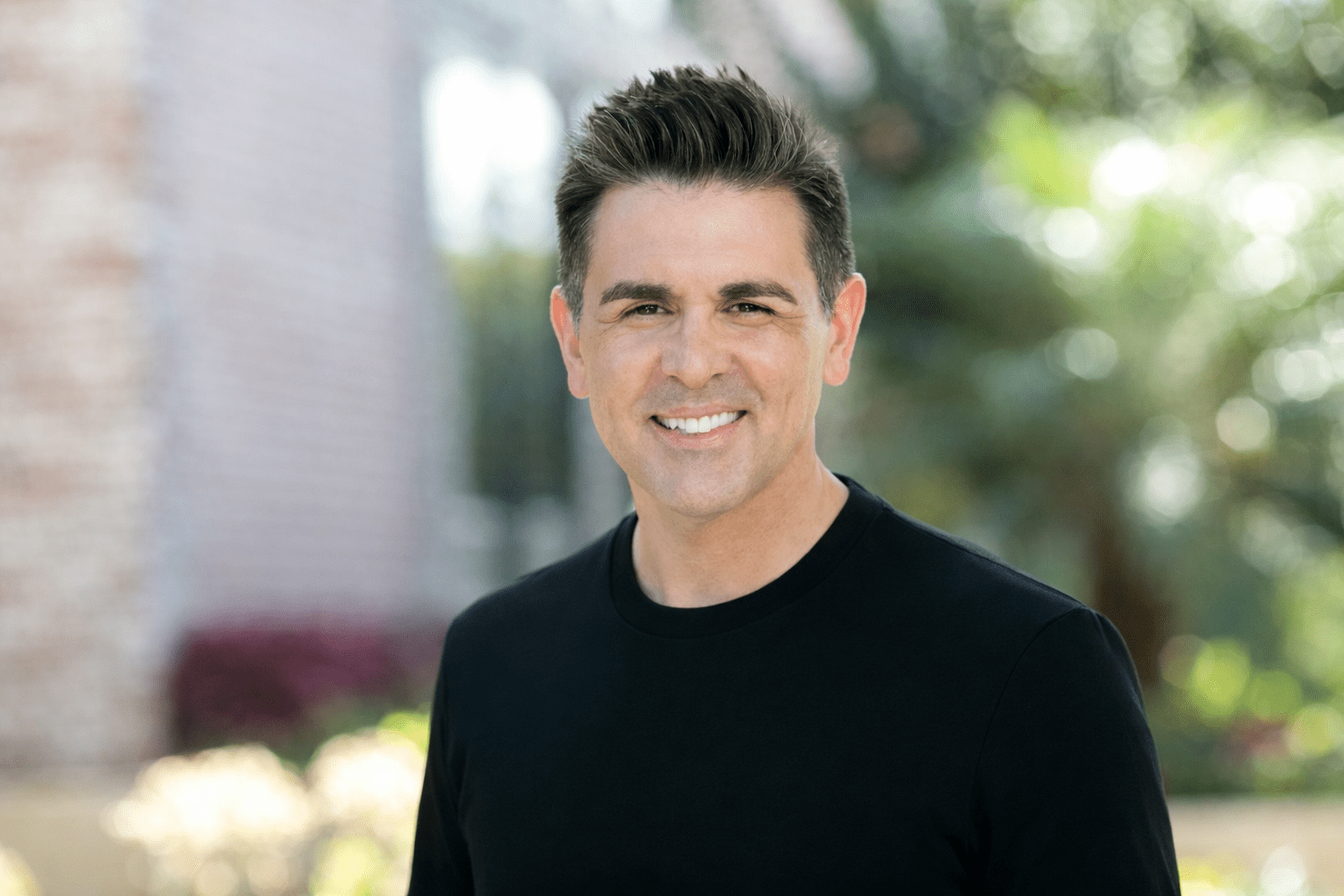
— Christian Graham
Founder, Body360 Fit

![Full Body Kettlebell Workout [PDF] | Body360 Fit](https://body360fit.com/wp-content/uploads/2021/01/Full-Body-Kettlebell-Workout-PDF.png)